
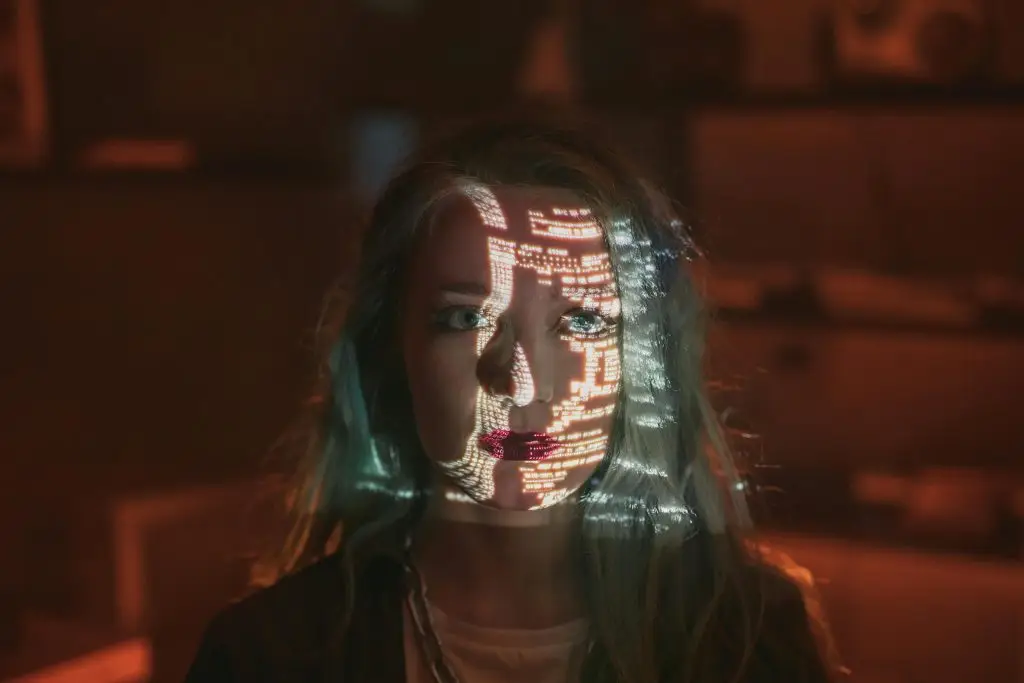
In a world where seeing is no longer believing, we find ourselves at a digital crossroads. As HBO’s chilling new film Mountainhead starkly illustrates, we’re entering an era where AI-generated videos can spark global chaos, from market crashes to political assassinations. All from convincingly fake content that never actually happened.
I’ll be honest, as someone who works with this technology, even I have to pause sometimes and remind myself: this shift is happening faster than our systems (and nervous systems) are prepared for. Staying grounded matters more than ever.
The technology depicted in this dark satire isn’t science fiction; it’s our immediate reality. Advanced AI video models like Runway Gen-4 and OpenAI’s Sora now generate hyper-realistic footage that can place anyone, anywhere, saying or doing nearly anything. As we venture into this uncharted territory, protecting our mental wellbeing and digital identity has never been more critical.
This article explores three strategies to shield yourself and maintain digital wellness as we navigate this profound technological shift, one that’s fundamentally altering our relationship with visual media and truth itself.
The Rising Tide of Synthetic Reality
Before we dive into protection strategies, let’s understand what we’re facing. The AI revolution in video generation has reached a tipping point where:
- 98% of online deepfakes contain nonconsensual intimate content, primarily targeting women (Spiralytics, 2025)
- 27 states have enacted pre-election moratoriums on synthetic media after deepfake robocalls disrupted primary elections
- 42% of high schools nationwide have investigated deepfake incidents, with 89% targeting female students (National Education Association, 2025)
- Deepfake-enabled financial fraud costs businesses $2.3 billion annually (FBI Internet Crime Report, 2025)
Let’s be clear, these impacts aren’t evenly distributed. Women, marginalized genders, and public figures are already disproportionately targeted by weaponized deepfakes. Protecting ourselves isn’t vanity, it’s a necessity in this landscape.
The creators of Mountainhead tapped into these very real anxieties, portraying a world where deepfake technology unleashes hatred on social media, triggers real-world violence, and threatens global stability. The film’s critical message resonates: we need protection strategies now, before the line between real and synthetic becomes permanently blurred.
Strategy 1: Develop Digital Media Literacy Skills
The first line of defense against the rising tide of synthetic media is education. As AI-generated content becomes increasingly sophisticated, we must sharpen our ability to detect and question what we see online.
Here’s what to watch for.
Learn the Red Flags of Synthetic Media
Despite impressive advances, AI-generated videos still contain subtle inconsistencies. Train yourself to look for:
- Unnatural eye movements or blinking patterns
- Inconsistent lighting on faces versus backgrounds
- Audio-visual misalignment (lips not perfectly matching words)
- Awkward transitions between facial expressions
- Unnatural hair movement or texture, especially around hairlines
MIT’s “Media Literacy in the Age of Deepfakes” course teaches these detection techniques and reports that participants develop a 64% improvement in spotting synthetic content after just three hours of training.
Practice Secondary Verification
Think of this as digital self-defense, not paranoia, but proactive resilience.
Never trust a single source for important information, especially if it appears controversial or emotional. When encountering suspicious content:
- Cross-reference with multiple reputable news sources
- Check if the original creator or subject has confirmed the content
- Use reverse image search tools to track image or video origins
- Check metadata when possible to verify creation details
- Look for official statements from relevant organizations
In Mountainhead, the character Jeff creates an AI filter that distinguishes real media from manipulated content. While such technology is developing in real life (Sensity AI claims 98% accuracy), critical thinking remains our most reliable tool.
Understand Context and Motivation
Ask yourself why a particular video might exist and who benefits from its spread:
- Consider the timing: Is it released strategically before an election or major decision?
- Analyze the emotional reaction it’s designed to provoke
- Follow the money: Who gains financially or politically?
- Check if it aligns with known facts about the people or events portrayed
“Reality apathy”; where we stop trusting any digital evidence is a real psychological danger. By maintaining healthy skepticism without falling into cynicism, we protect not just our information ecosystem but our mental wellbeing.
Strategy 2: Safeguard Your Digital Identity
While developing media literacy helps us consume content more safely, we must also protect our personal digital footprint to prevent our likenesses from being weaponized.
A few ways to stay proactive.
Audit and Secure Your Online Presence
Take stock of your existing digital identity and tighten security:
- Review and restrict privacy settings on all social platforms
- Remove unnecessary facial images or limit their accessibility to trusted contacts
- Use strong, unique passwords and enable two-factor authentication on all accounts
- Consider using a password manager to maintain security across platforms
- Regularly search your name to monitor where your images appear
Many victims of deepfake harassment report that attackers compiled images from various public sources. By limiting access to your visual identity, you reduce the training data available to malicious actors.
Implement Protective Technical Measures
While I advocate for using AI in ways that serve humanity, the reality is that misuse is rampant. Until our laws catch up, taking personal protective steps is key.
Several technical approaches can help shield your digital identity:
- Watermark your photos and videos before sharing them publicly
- Use metadata-stripping tools when appropriate to remove identifying information
- Consider selective use of face-blurring tools in public photos
- Enable notifications for when your name or images are tagged online
- Use secure communication channels for sensitive discussions
The NO FAKES Act, highlighted in recent legislative pushes, aims to grant individuals lifetime control over their digital likenesses, with penalties of $50,000 per violation for unauthorized deepfakes. Until comprehensive protection exists, these personal security measures remain essential.
Create Authentication Systems with Close Contacts
Establish verification protocols with family, colleagues, and friends:
- Agree on personal verification questions that only you would know
- Establish emergency contact protocols if suspicious content appears
- Use code words or phrases for sensitive communications
- Have backup communication channels if primary ones are compromised
- Discuss deepfake risks openly with your social circles
In Mountainhead, deepfake videos depicting one of the Brewster tech CEOs created chaos because people had no way to verify authenticity. By establishing trust systems within your network, you create human verification that AI cannot easily circumvent.
Strategy 3: Maintain Mental and Emotional Equilibrium
Perhaps the most challenging aspect of navigating this new reality is maintaining psychological wellness when visual evidence, once our most trusted sense, becomes unreliable.
These practices keep you grounded.
Develop Healthy Digital Boundaries
Establish clear rules for your digital consumption:
- Schedule regular digital detox periods where you disconnect completely
- Create time limits for social media consumption
- Use tools like Screen Time or Digital Wellbeing to monitor usage
- Establish phone-free zones in your home and daily routine
- Practice mindful consumption by asking “Is this serving me?” before engaging
Studies show correlation between heavy social media use and increased anxiety about deepfakes. Stanford researchers found participants who limited social media to 30 minutes daily reported 22% lower anxiety about digital manipulation.
Cultivate Information Resilience
Build mental habits that support wellbeing in an era of information uncertainty:
- Practice mindfulness meditation to reduce reactivity to disturbing content
- Engage with diverse news sources to maintain balanced perspective
- Join communities focused on digital literacy and mutual support
- Seek professional support if anxiety about technology becomes overwhelming
- Remember that technological change has always required adaptation
Telecoming’s mental health AI reports a 31% increase in workplace stress linked to deepfake concerns. Counteract this by developing what psychologists call “cognitive flexibility”, the ability to adapt to new information environments without becoming overwhelmed.
Embrace the Human Connection
As synthetic media becomes more prevalent, authentic human connection becomes more valuable:
- Prioritize in-person interactions where possible
- Build trust networks with people who share your values
- Support initiatives promoting media transparency and ethics
- Share verification techniques with vulnerable community members
The Content Authenticity Initiative’s “nutrition labels” for media detail AI involvement, editing history, and ownership. Supporting such transparency measures helps create a more trustworthy digital ecosystem.
Remember: no AI, no algorithm, no synthetic media will ever replicate the wild, messy, beautiful complexity of human connection.
Moving Forward in a Post-Truth Visual World
The emergence of hyper-realistic AI video doesn’t mark the end of truth, but it does require us to evolve how we determine it. By developing media literacy skills, safeguarding our digital identities, and maintaining psychological resilience, we can navigate this new landscape without surrendering to either paralyzing skepticism or dangerous credulity.
Mountainhead may portray a dystopian vision where deepfakes trigger global chaos, but our reality isn’t predetermined. The same technological revolution creating these challenges also empowers us with detection tools, authentication systems, and community networks that can verify truth.
The question isn’t whether we can adapt to this new reality, humans have always adapted to technological change. The question is how thoughtfully we’ll do so, and whether we’ll maintain our connection to authentic human experience in the process.
And while the tools may evolve, one thing won’t change: we protect each other best when we stay connected, stay curious, and refuse to let fear define how we move forward.
References
- HBO’s Mountainhead (2025) – A dark satire exploring the destructive power of AI-driven deepfakes
- “Media Literacy in the Age of Deepfakes” – MIT Open Courseware (2025)
- National Education Association Report on Deepfake Incidents in Schools (2025)
- FBI Internet Crime Report on Voice Cloning Attacks (2025)
- Sensity AI Deepfake Detection Technology Report (2025)
- Content Authenticity Initiative Transparency Standards (2025)
- “The Dual Edge of AI Video Innovation” – Trends, Threats, and Digital Wellness Strategies (2025)
- Stanford University Study on Social Media Consumption and Deepfake Anxiety (2025)
- NO FAKES Act Legislative Proposal (2025)
- Telecoming’s Mental Health AI Report on Workplace Stress (2025)